KO
|
EN
gitlite — search
Search
#javascript
#python
#hacktoberfest
#react
#ai
#typescript
#llm
#go
#golang
#android
#machine-learning
#rust
#deep-learning
#linux
makroud
★ 11
Open GitHub ↗
A high level SQL Connector
Download README (.md)
Explore Similar Repositories
PyYeelight
:
Simple Python3 library for Yeelight Wifi bulbs
biRNN-CRF
:
Researching the forward-backward algorithm
vscode-setimonokai-theme
:
Port of Seti Monokai theme for Visual Studio Code
blog
:
Personal Gatsby.js blog
zThemes.free
:
zwwooooo's WordPress Theme (free)
// repository documentation
Was this content helpful?
★ 0
(0 ratings)
Select Rating:
★
★
★
★
★
Submit Feedback
Recent Feedback
×
Download README
Do you want to download the
README.md
file for
makroud
?
Download (.md)
# Makroud [![CircleCI][circle-img]][circle-url] [![Documentation][godoc-img]][godoc-url] ![License][license-img] _A high level SQL Connector._ ## Introduction Makroud is a high level SQL Connector that only support **PostgreSQL** at the moment. It's an advanced mapper and/or a lightweight ORM that relies on reflection to generate queries. **Using reflection has its flaws**, type safety is not guaranteed and a panic is still possible, even if you are very careful and vigilant. **However,** development is super easy and straightforward since it doesn't rely on code generation. Makroud isn't a migration tool and it doesn't inspect the database to define the application data model _(since there is no code generation)_. It's **really** important to have Active Record that are synchronized with your data model in your database. It also support simple associations _(one, many)_ with preloading. Under the hood, it relies on [Loukoum](https://github.com/ulule/loukoum) for query generation. In addition, it's heavily inspired by [Sqlx](https://github.com/jmoiron/sqlx) for its extended mapper and [Sqalx](https://github.com/heetch/sqalx) to support nested transaction. ## Installation Using [Go Modules](https://github.com/golang/go/wiki/Modules) ```console go get github.com/ulule/makroud@v0.8.0 ``` ## Usage ### Create a Driver A **Driver** is a high level abstraction of a database connection or a transaction. It's almost required everytime alongside a `context.Context` to manipulate rows. ```go driver, err := makroud.New( makroud.Host(cfg.Host), makroud.Port(cfg.Port), makroud.User(cfg.User), makroud.Password(cfg.Password), makroud.Database(cfg.Name), makroud.SSLMode(cfg.SSLMode), makroud.MaxOpenConnections(cfg.MaxOpenConnections), makroud.MaxIdleConnections(cfg.MaxIdleConnections), ) ``` Also, you can use a struct directly if you don't need to use [functional options](https://dave.cheney.net/2014/10/17/functional-options-for-friendly-apis): ```go driver, err := makroud.NewWithOptions(&makroud.ClientOptions{ Host: cfg.Host, Port: cfg.Port, User: cfg.User, Password: cfg.Password, Database: cfg.Name, SSLMode: cfg.SSLMode, MaxOpenConnections: cfg.MaxOpenConnections, MaxIdleConnections: cfg.MaxIdleConnections, }) ``` ### Advanced mapper If a lightweight ORM doesn't fit your requirements and an advanced mapper is enough for your usecase: makroud does that very well. You could either use primitive and compound types for your queries: ```go import "github.com/ulule/makroud" stmt := `SELECT id FROM users WHERE email = 'john.doe@example.com'` id := int64(0) err := makroud.RawExec(ctx, driver, stmt, &id) if err != nil { return err } stmt = `SELECT created_at FROM users WHERE id = 42` created := time.Time{} err := makroud.RawExec(ctx, driver, stmt, &created) if err != nil { return err } stmt = `SELECT email FROM users WHERE id IN (1, 2, 3, 4)` list := []string{} err := makroud.RawExec(ctx, driver, stmt, &list) if err != nil { return err } ``` Or, define a struct that contains your database table _(or view)_ columns: ```go import "github.com/ulule/makroud" import "github.com/ulule/loukoum/v3" type User struct { ID int64 `mk:"id"` Email string `mk:"email"` Password string `mk:"password"` Country string `mk:"country"` Locale string `mk:"locale"` } users := []User{} stmt := loukoum.Select("*"). From("users"). Where(loukoum.Condition("id").In(1, 2, 3, 4)) err := makroud.Exec(ctx, driver, stmt, &users) if err != nil { return err } ``` ### Lightweight ORM #### Define a Model With the [**Active Record**](https://en.wikipedia.org/wiki/Active_record_pattern) approach, you have to define a model that wraps your database table _(or view)_ columns into properties. Models are structs that contain basic go types, pointers, `sql.Scanner`, `driver.Valuer` or `Model` interface. All the fields of this struct will be columns in the database table. #### An example ```go type User struct { // Columns ID string `makroud:"column:id,pk:ulid"` Email string `makroud:"column:email"` Password string `makroud:"column:password"` Country string `makroud:"column:country"` Locale string `makroud:"column:locale"` ProfileID string `makroud:"column:profile_id,fk:profiles"` // Relationships Roles []Role `makroud:"relation:roles.user_id"` Profile *Profile `makroud:"relation:profile_id"` } func (User) TableName() string { return "users" } ``` #### What does it means ? First of all, you have to define a `TableName` method that returns the database table name _(or view)_. Without that information, `makroud` cannot uses that struct as a `Model`. Then, you have to define your model columns using struct tags: - **column**(`string`): Define column name. - **pk**(`bool|string`): Define column as a primary key, it accepts the following argument: - **true**: Uses internal db mechanism to define primary key value - **ulid**: Generate a [ULID](https://github.com/ulid/spec) to define primary key value - **uuid-v1**: Generate a [UUID V1](<https://en.wikipedia.org/wiki/Universally_unique_identifier#Version_1_(date-time_and_MAC_address)>) to define primary key value - **uuid-v4**: Generate a [UUID V4](<https://en.wikipedia.org/wiki/Universally_unique_identifier#Version_4_(random)>) to define primary key value - **default**(`bool`): On insert, if model has a zero value, it will use the db default value. - **fk**(`string`): Define column as a foreign key, reference table must be provided. - **relation**(`string`): Define which column to use for preload. The column must be prefixed by the table name if it's not the model table name _(However, the prefix is optional if the table name is the same as the model)_. See [Preload](https://github.com/ulule/makroud#preload) section for further information. - **-**(`bool`): Ignore this field. > **NOTE:** Tags of type `bool` can be set as `key:true` or just `key` for implicit `true`. > **NOTE:** Tags must be separated by a comma (`tagA, tagB, tagC`). Keep in mind that a model **requires one primary key (and just one)**. It's a known limitation that only one primary key can be specified and it can't be a composite key. After that, you can define optional relationships _(or associations)_ that can be preloaded later. The preload mechanism, which enables you to fetch relationships from database, support these types: - `Model` - `*Model` - `[]Model` - `[]*Model` - `*[]Model` - `*[]*Model` > **NOTE:** You could either use `makroud` or `mk` as tag identifier. #### Conventions ##### ID as Primary Key By default, if the `pk` tag is undefined, `makroud` will use the field named `ID` as primary key with this configuration: `pk:db` ```go type User struct { ID string `makroud:"column:id"` // Field named ID will be used as a primary key by default. Name string `makroud:"column:name"` } ``` ##### Snake Case Column Name By default, if the `column` tag is undefined, `makroud` will transform field name to lower snake case as column name. ```go type User struct { ID string `makroud:"pk"` // Column name is `id` Name string `makroud:""` // Column name is `name` } ``` ##### Preload relationships By default, if the `relation` tag is undefined, `makroud` will infer the column name to use for the preload mechanism. **Local foreign key:** Let's define a user with a profile: ```go type User struct { ID string `makroud:"column:id,pk"` Email string `makroud:"column:email"` PID string `makroud:"column:profile_id,fk:profiles"` Profile *Profile } func (User) TableName() string { return "users" } type Profile struct { ID string `makroud:"column:id,pk:ulid"` FirstName string `makroud:"column:first_name"` LastName string `makroud:"column:last_name"` Enabled bool `makroud:"column:enabled"` } func (Profile) TableName() string { return "profiles" } ``` Since the field `Profile` in the `User` has no `relation` tag, `makroud` will try to find, in the first pass, the field with the name `ProfileID` _(FieldName + ID)_ in `User` model. It's mandatory that this field is also a foreign key to the `profiles` table. Unfortunately for us, `User` model has no such field. So, `makroud` will try to find, in the second and final pass, the first field that is a foreign key to the `profiles` table. In our example, it will use the field `PID`. **Remote foreign key:** Let's define a user with a profile: ```go type User struct { ID string `makroud:"column:id,pk"` Email string `makroud:"column:email"` Profile *Profile } func (User) TableName() string { return "users" } type Profile struct { ID string `makroud:"column:id,pk:ulid"` FirstName string `makroud:"column:first_name"` LastName string `makroud:"column:last_name"` Enabled bool `makroud:"column:enabled"` UID string `makroud:"column:user_id,fk:users"` } func (Profile) TableName() string { return "profiles" } ``` Since the field `Profile` in the `User` has no `relation` tag, `makroud` will try to find, in the first pass, the field with the name `UserID` _(ModelName + ID)_ in `Profile` model. It's mandatory that this field is also a foreign key to the `users` table. Unfortunately for us, `Profile` model has no such field. So, `makroud` will try to find, in the second and final pass, the first field that is a foreign key to the `users` table. In our example, it will use the field `UID`. ##### CreatedAt tracking For models having a `CreatedAt` field, it will be set to current time when the record is first created. ```go type User struct { ID string `makroud:"column:id,pk"` Name string `makroud:"column:name"` CreatedAt time.Time `makroud:"column:created_at"` } ``` You can override the default field name and/or column name by adding this method: ```go func (User) CreatedKey() string { return "created" } ``` ##### UpdatedAt tracking For models having a `UpdatedAt` field, it will be set to current time when records are updated. ```go type User struct { ID string `makroud:"column:id,pk"` Name string `makroud:"column:name"` UpdatedAt time.Time `makroud:"column:updated_at"` } ``` You can override the default field name and/or column name by adding this method: ```go func (User) UpdatedKey() string { return "updated" } ``` ##### DeletedAt tracking For models having a `DeletedAt` field, it will be set to current time when records are archived. ```go type User struct { ID string `makroud:"column:id,pk"` Name string `makroud:"column:name"` DeletedAt pq.NullTime `makroud:"column:deleted_at"` } ``` You can override the default field name and/or column name by adding this method: ```go func (User) DeletedKey() string { return "deleted" } ``` ### Operations For the following sections, we assume that you have a `context.Context` and a `makroud.Driver` instance. #### Insert For a simple insert, you can save a model like this: ```go func CreateUser(ctx context.Context, driver makroud.Driver, name string) (*User, error) { user := &User{ Name: name, } err := makroud.Save(ctx, driver, user) if err != nil { return nil, err } return user, nil } ``` Or for more complex statements, use a [Loukoum](https://github.com/ulule/loukoum) `InsertBuilder` alongside the model. ```go import "github.com/ulule/loukoum/v3" func CreateUser(ctx context.Context, driver makroud.Driver, name string) (*User, error) { user := &User{ Name: name, } stmt := loukoum.Insert("users"). Set(loukoum.Pair("name", user.Name)). Returning("id, created_at, updated_at") err := makroud.Exec(ctx, driver, stmt, user) if err != nil { return nil, err } return user, nil } ``` #### Update For a simple update, asumming your model have a primary key defined, you can save it by executing: ```go func UpdateUser(ctx context.Context, driver makroud.Driver, user *User, name string) error { user.Name = name return makroud.Save(ctx, driver, user) } ``` Or for more complex statements, use a [Loukoum](https://github.com/ulule/loukoum) `UpdateBuilder` alongside the model. ```go import "github.com/ulule/loukoum/v3" func UpdateUser(ctx context.Context, driver makroud.Driver, user *User, name string) error { user.Name = name stmt := loukoum.Update("users"). Set( loukoum.Pair("updated_at", loukoum.Raw("NOW()")), loukoum.Pair("name", user.Name), ). Where(loukoum.Condition("id").Equal(user.ID)). Returning("updated_at") err := makroud.Exec(ctx, driver, stmt, user) if err != nil { return nil, err } return user, nil } ``` #### Delete For a simple delete _(using a `DELETE` statement)_, asumming your model have a primary key defined, you can delete it using: ```go func DeleteUser(ctx context.Context, driver makroud.Driver, user *User) error { return makroud.Delete(ctx, driver, user) } ``` Or for more complex statements, use a [Loukoum](https://github.com/ulule/loukoum) `DeleteBuilder` alongside the model. ```go import "github.com/ulule/loukoum/v3" func DeleteUser(ctx context.Context, driver makroud.Driver, user *User) error { stmt := loukoum.Delete("users").Where(loukoum.Condition("id").Equal(user.ID)) err := makroud.Exec(ctx, driver, stmt, user) if err != nil { return nil, err } return user, nil } ``` #### Archive Archive executes an `UPDATE` on `DeletedAt` field on given value. ```go func ArchiveUser(ctx context.Context, driver makroud.Driver, user *User) error { return makroud.Archive(ctx, driver, user) } ``` > **NOTE**: If the model has no `DeletedAt` field, an error is returned. Or for more complex statements, use a [Loukoum](https://github.com/ulule/loukoum) `UpdateBuilder` alongside the model. ```go import "github.com/ulule/loukoum/v3" func ArchiveUser(ctx context.Context, driver makroud.Driver, user *User) error { user.Name = name stmt := loukoum.Update("users"). Set( loukoum.Pair("deleted_at", loukoum.Raw("NOW()")), loukoum.Pair("name", ""), ). Where(loukoum.Condition("id").Equal(user.ID)). Returning("deleted_at") err := makroud.Exec(ctx, driver, stmt, user) if err != nil { return nil, err } return user, nil } ``` #### Query Because querying data is a bit more complex than just writing and/or deleting stuff. By using [Loukoum](https://github.com/ulule/loukoum) components, you can either execute simple query: ```go import "github.com/ulule/loukoum/v3" func GetUserByID(ctx context.Context, driver makroud.Driver, id string) (*User, error) { user := &User{} err := makroud.Select(ctx, driver, user, loukoum.Condition("id").Equal(id)) if err != nil { return nil, err } return user, nil } func ListMessagesByUserID(ctx context.Context, driver makroud.Driver, userID string, page int) ([]*Message, error) { messages := []*Message{} err := makroud.Select(ctx, driver, &messages, loukoum.Condition("user_id").Equal(id), loukoum.Order("created_at", loukoum.Desc), loukoum.Limit(50), loukoum.Offset(50 * (page - 1)), ) if err != nil { return nil, err } return messages, nil } ``` Or execute more complex statements: ```go import "github.com/ulule/loukoum/v3" func FindStaffComments(ctx context.Context, driver makroud.Driver) ([]*Comment, error) { comments := []*Comment{} stmt := loukoum.Select("id", "email", "status", "user_id", "message", "created_at"). From("comments"). Where(loukoum.Condition("deleted_at").IsNull(true)). Where( loukoum.Condition("user_id").In( loukoum.Select("id"). From("users"). Where(loukoum.Condition("role").Equal("staff")), ), ) err := makroud.Exec(ctx, driver, stmt, &comments) if err != nil { return nil, err } return comments, nil } ``` Also, it supports query without `Model`. ```go func FindUserIDWithStaffRole(ctx context.Context, driver makroud.Driver) ([]string, error) { list := []string{} stmt := loukoum.Select("id"). From("users"). Where(loukoum.Condition("role").Equal("staff")) err := makroud.Exec(ctx, driver, stmt, &list) if err != nil { return nil, err } return list, nil } ``` ### Transaction Sometimes, you need to execute queries and/or commands inside a transaction block, that bundles multiple steps into a single, all-or-nothing operation. This is achieved by declaring a lambda function. If this function returns an error, the transaction rollbacks automatically. Otherwise, the transaction will be committed. ```go func SetupUsers(ctx context.Context, driver makroud.Driver) error { return makroud.Transaction(ctx, driver, nil, func(tx makroud.Driver) error { err := makroud.Save(ctx, tx, &User{ Name: "Benjamin", }) if err != nil { return err } err = makroud.Save(ctx, tx, &User{ Name: "Taha", }) if err != nil { return err } return nil }) } ``` And other times, transactions with an isolation level. ```go func Withdraw(ctx context.Context, driver makroud.Driver) error { return makroud.Transaction(ctx, driver, makroud.LevelSerializable, func(tx makroud.Driver) error { // Withdraw operation... return nil }, ) } ``` Or even, nested transaction with the option `SavepointEnabled`. ```go func AcceptOffer(ctx context.Context, driver makroud.Driver) error { return makroud.Transaction(ctx, driver, nil, func(tx1 makroud.Driver) error { // // Execute several operations. // err := makroud.Transaction(ctx, tx1, nil, func(tx2 makroud.Driver) error { // // Execute complex operations that may succeed... // return err }) if err != nil { // // Execute fallback operations if an error has occurred... // return nil } // // Execute normal operations otherwise... // return nil }) } ``` ### Preload On models having associations, you can execute a preload to fetch these relationships from the database. Let's define a user with a profile: ```go type User struct { ID string `makroud:"column:id,pk"` Email string `makroud:"column:email"` Profile *Profile `makroud:"relation:profiles.user_id"` } func (User) TableName() string { return "users" } type Profile struct { ID string `makroud:"column:id,pk:ulid"` FirstName string `makroud:"column:first_name"` LastName string `makroud:"column:last_name"` UserID string `makroud:"column:user_id,fk:users"` Enabled bool `makroud:"column:enabled"` } func (Profile) TableName() string { return "profiles" } ``` Once you obtain a user record, you can preload its profile by executing: ```go err := makroud.Preload(ctx, driver, &user, makroud.WithPreloadField("Profile")) ``` **Or,** if preloading requires specific conditions, you can use a callback like this: ```go import "github.com/ulule/loukoum/v3/builder" err := makroud.Preload(ctx, driver, &user, makroud.WithPreloadCallback("Profile", func(query builder.Select) builder.Select { return query.Where(loukoum.Condition("enabled").Equal(true)) }), ) ``` If there is no error and if the user record has a profile, then you should have the `Profile` value loaded. <!--- ## Benchmarks A [benchmark repository](https://github.com/ulule/makroud-benchmarks) containing result with other ORM or Mapper using reflection is available. > **NOTE:** A benchmark is always an observation, not a measurement of performance. 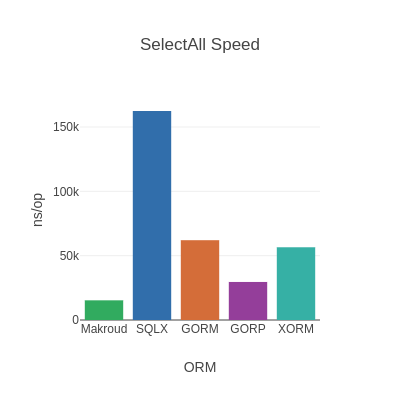 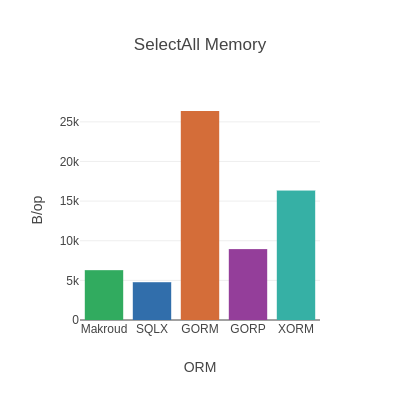 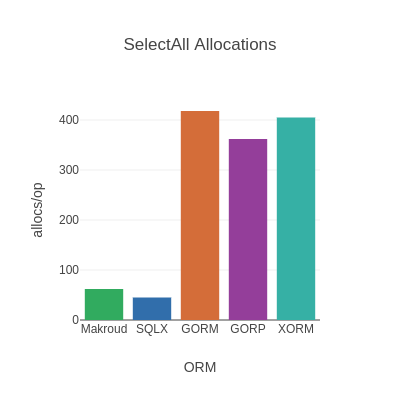 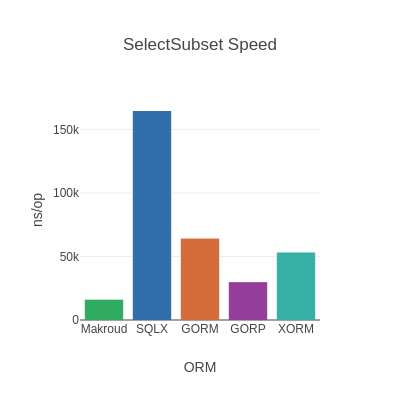 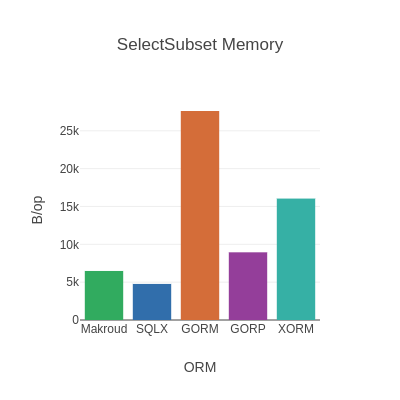 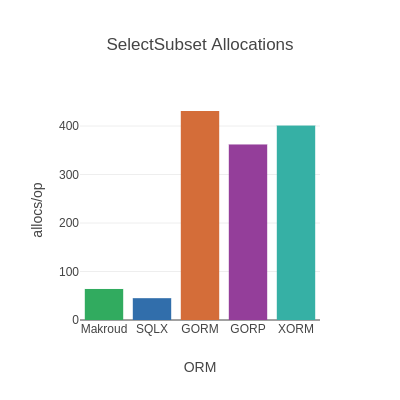 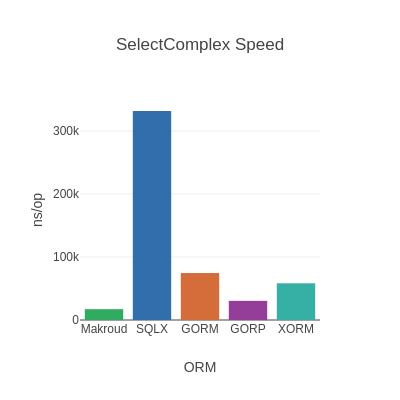 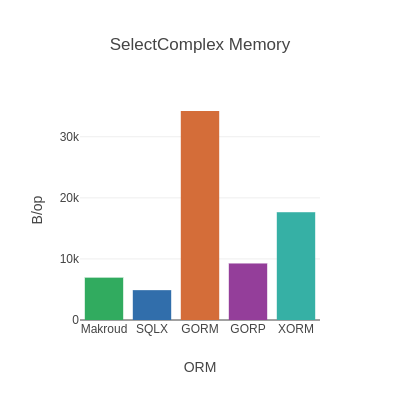 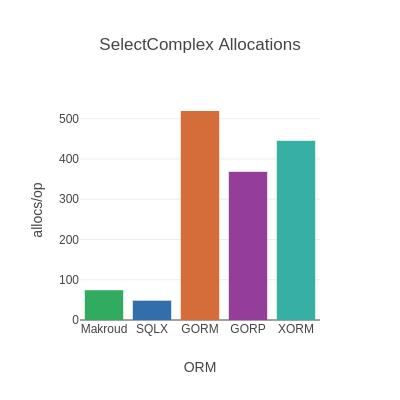 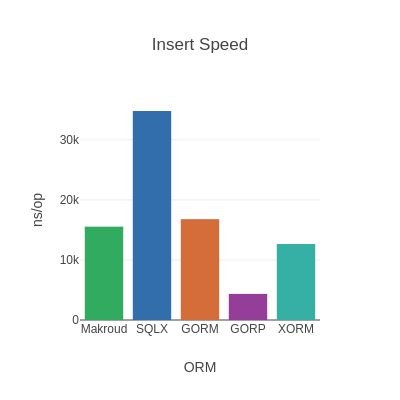 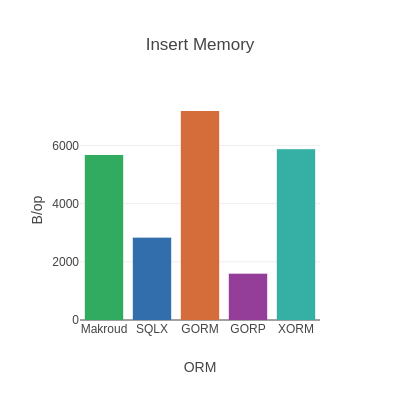 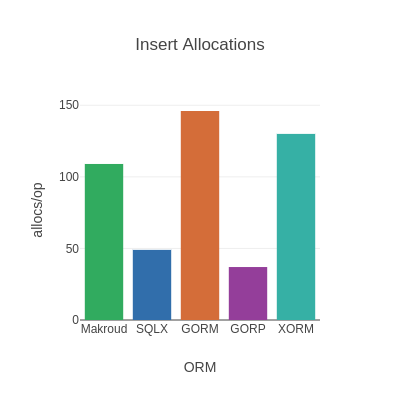 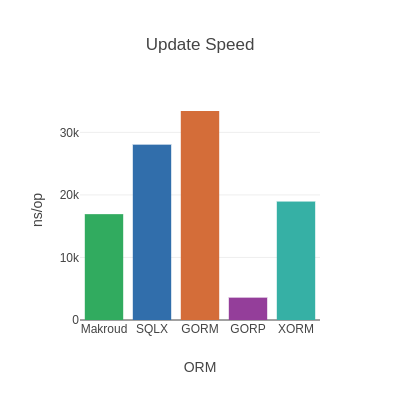 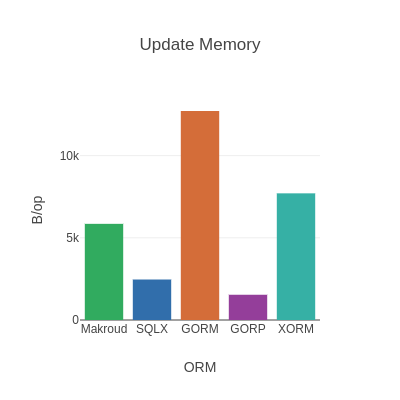 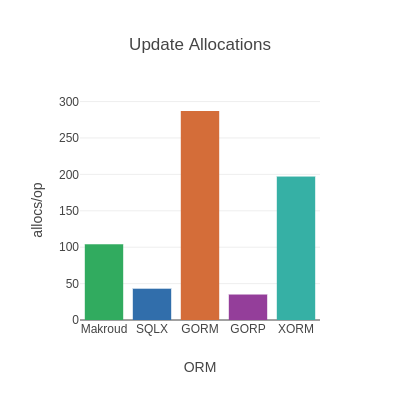 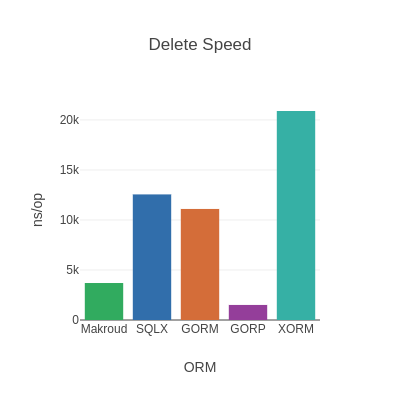 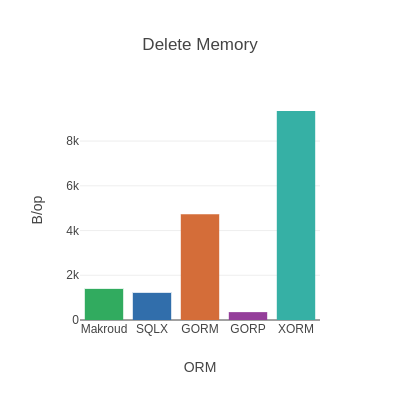 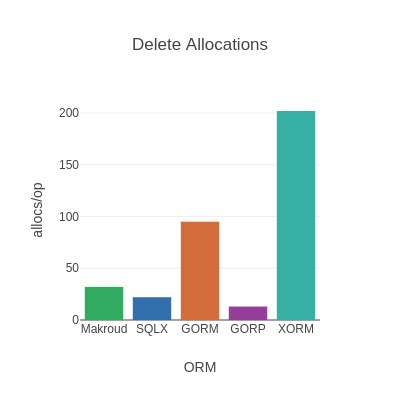 --> ## Development ### Docker The test suite is running on PostgreSQL. We use [Docker](https://docs.docker.com/install/) to create a running container using [scripts/database](scripts/database). ### Testing To run the test suite, simply execute: ``` scripts/test ``` Also, you can execute the linter with: ``` scripts/lint ``` #### Notes If you have to examine rows generated from unit test, you can prevent the test suite to cleanup by using: ``` DB_KEEP=true scripts/test ``` Then, you can access the database with: ``` scripts/database --client ``` ### Random Because sometimes it's hard to think of a good test fixture, using generators can save your productivity. This website was a great help to write unit test: http://www.fantasynamegenerators.com ## License This is Free Software, released under the [`MIT License`][license-url]. ## Contributing - Ping us on twitter: - [@novln\_](https://twitter.com/novln_) - [@oibafsellig](https://twitter.com/oibafsellig) - [@thoas](https://twitter.com/thoas) - Fork the [project](https://github.com/ulule/loukoum) - Fix [bugs](https://github.com/ulule/loukoum/issues) **Don't hesitate ;)** [godoc-url]: https://godoc.org/github.com/ulule/makroud [godoc-img]: https://godoc.org/github.com/ulule/makroud?status.svg [license-img]: https://img.shields.io/badge/license-MIT-blue.svg [license-url]: LICENSE [circle-url]: https://circleci.com/gh/ulule/makroud/tree/master [circle-img]: https://circleci.com/gh/ulule/makroud.svg?style=shield&circle-token=e53497efffde023bac7f2710bd12c5d0e71f5af4
