KO
|
EN
gitlite — search
Search
#javascript
#python
#java
#spring-boot
#csharp
#docker
#nodejs
#machine-learning
#deep-learning
#neural-network
#tensorflow
#android
congee
★ 182
Open GitHub ↗
Concurrent ART (adaptive radix tree)
Download README (.md)
Explore Similar Repositories
xpresso
:
A composable Python ASGI web framework
apollo-opentracing
:
Performance trace your Apollo GraphQL server with Opentracing
EGObox
:
Efficient global optimization toolbox in Rust: bayesian optimization, mixture of gaussian processes, sampling methods
aframe-xr
:
INACTIVE - http://mzl.la/ghe-archive - System / Components to build WebXR experiences with A-frame
tanam
:
Plug-n-play CMS for websites on Firebase
// repository documentation
Was this content helpful?
★ 0
(0 ratings)
Select Rating:
★
★
★
★
★
Submit Feedback
Recent Feedback
×
Download README
Do you want to download the
README.md
file for
congee
?
Download (.md)
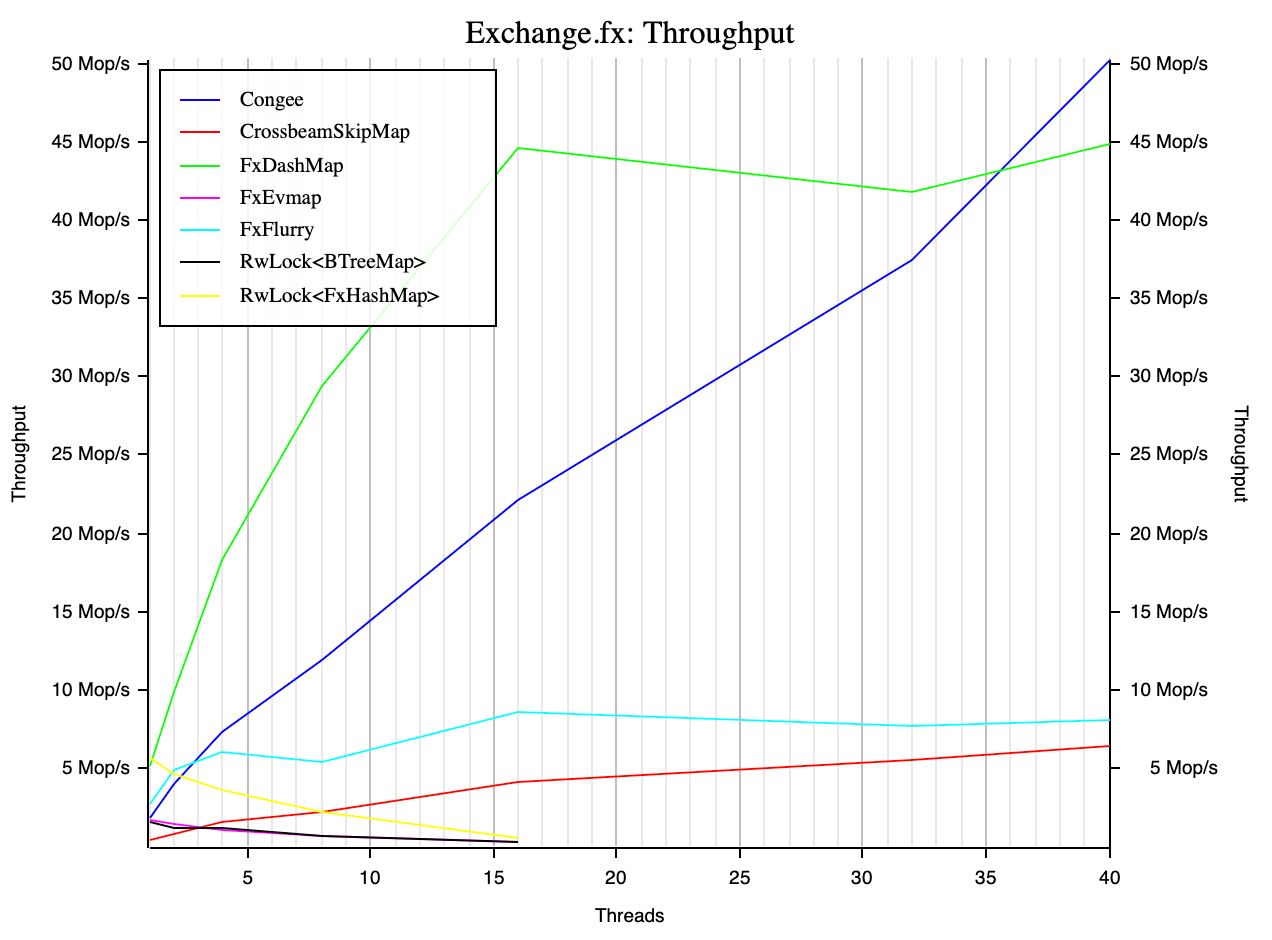
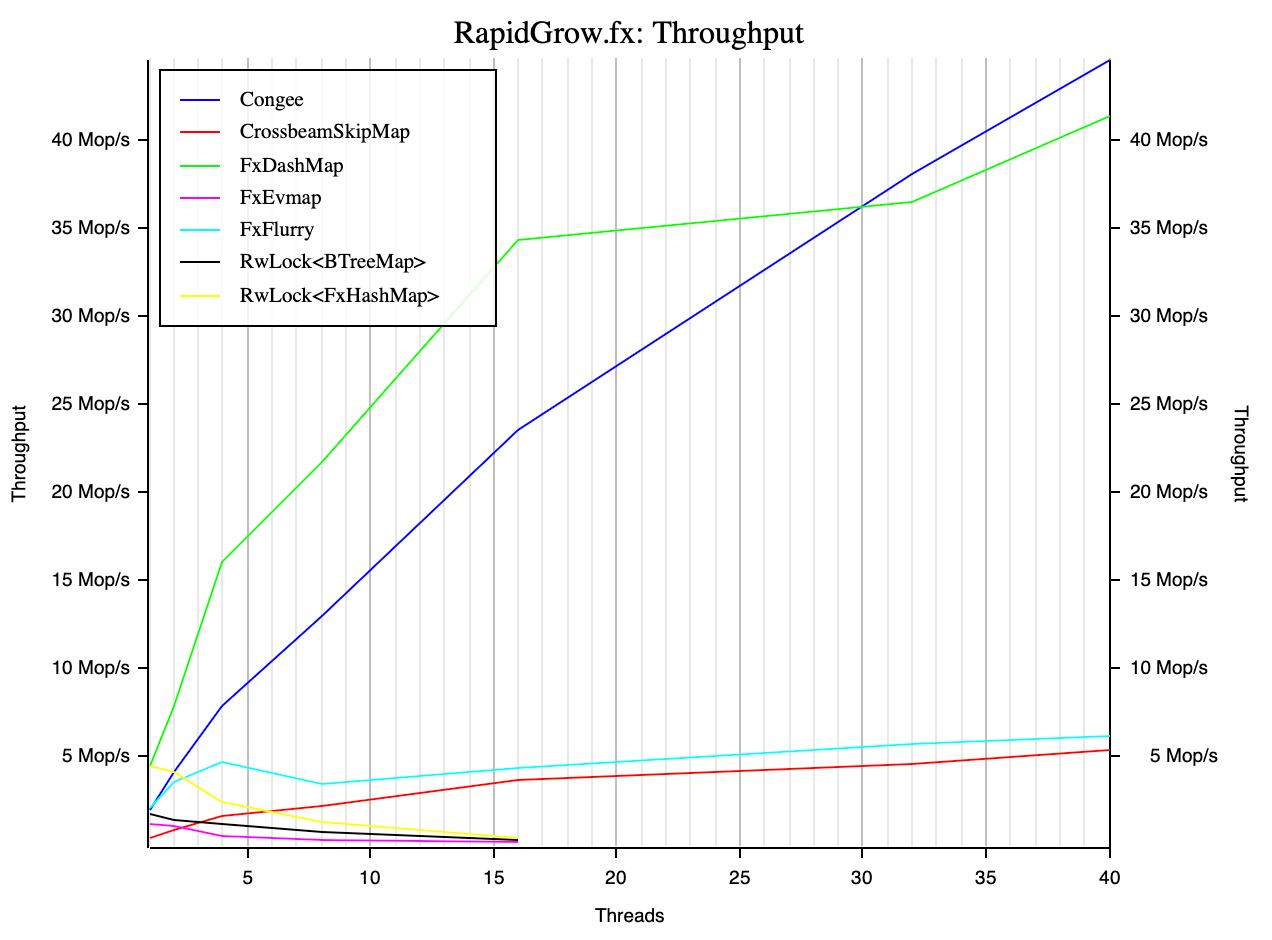
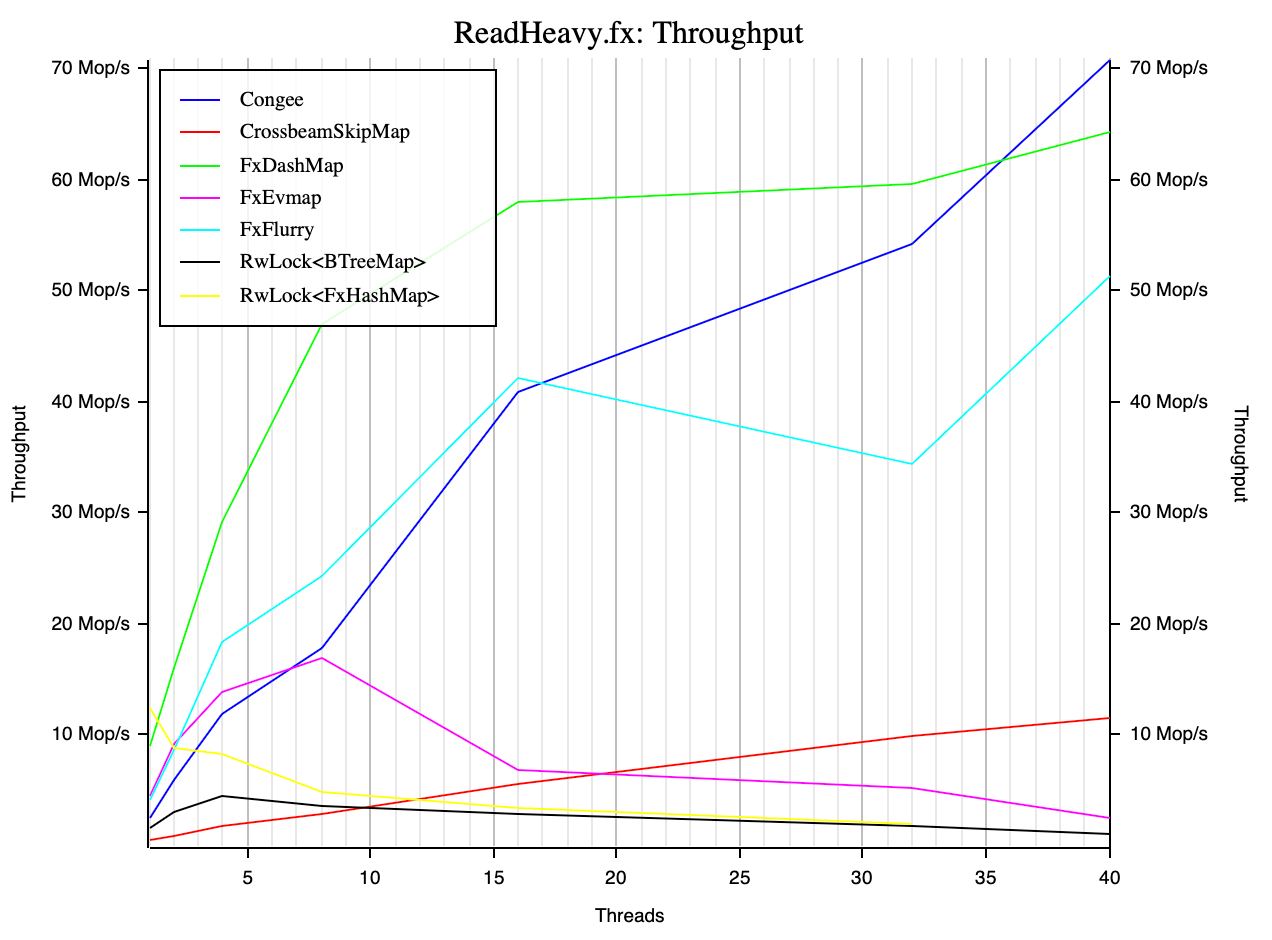
# Congee [](https://github.com/XiangpengHao/congee/actions/workflows/ci.yml) [](https://crates.io/crates/congee) [](https://deps.rs/crate/congee) [](https://codecov.io/gh/XiangpengHao/congee) [](https://docs.rs/congee) A Rust implementation of ART-OLC [concurrent adaptive radix tree](https://db.in.tum.de/~leis/papers/artsync.pdf). It implements the optimistic lock coupling with proper SIMD support. It only supports (and is optimized for) fixed sized 8 byte key; due to this specialization, congee has great performance -- basic operations are faster than most hash tables, range scan is an order of magnitude faster. The codebase is extensively tested with [{address|leak} sanitizer](https://doc.rust-lang.org/beta/unstable-book/compiler-flags/sanitizer.html) as well as [libfuzzer](https://llvm.org/docs/LibFuzzer.html). Congee's performance is continuously tracked [here](https://xiangpenghao.github.io/congee/dev/bench/). ### Why Congee? - Fast performance, faster than most hash tables. - Concurrent, super scalable, it reaches 150Mop/s on 32 cores. - Super low memory consumption. Hash tables often have exponential bucket size growth, which often lead to low load factors. ART is more space efficient. ### Why not Congee? - Not for arbitrary key size. This library only supports 8 byte key. ### Design principles Congee aims to be a simple and reliable **primitive** for building database systems. ### Example with Congee: ```rust use congee::Congee; use std::sync::Arc; let art = Congee::new(); let guard = art.pin(); // enter an epoch let value = Arc::new(String::from("hello")); art.insert(1, value.clone(), &guard).unwrap(); let retrieved = art.get(1, &guard).unwrap(); assert_eq!(retrieved.as_ref(), "hello"); // Update art.compute_if_present( 1, |current| Some(Arc::new(format!("{} world", current))), &guard ); let updated = art.get(1, &guard).unwrap(); assert_eq!(updated.as_ref(), "hello world"); let removed = art.remove(1, &guard).unwrap(); assert_eq!(removed.as_ref(), "hello world"); ``` ### Example with raw Congee (u64 key and value): ```rust use congee::CongeeRaw; let art = CongeeRaw::default(); let guard = art.pin(); // enter an epoch art.insert(0, 42, &guard); // insert a value let val = art.get(&0, &guard).unwrap(); // read the value assert_eq!(val, 42); let mut scan_buffer = vec![(0, 0); 8]; let scan_result = art.range(&0, &10, &mut scan_buffer, &guard); // scan values assert_eq!(scan_result, 1); assert_eq!(scan_buffer[0], (0, 42)); ``` ### Performance Benchmarked with the [`conc-map-bench`](https://github.com/xacrimon/conc-map-bench)