KO
|
EN
gitlite — search
Search
#python
#react
#pytorch
#typescript
#nodejs
#free
#machine-learning
#go
#reactjs
#tailwindcss
#java
#discord-bot
code-is-cheap
★ 56
Open GitHub ↗
No description available.
Download README (.md)
Explore Similar Repositories
nakedclaw
:
Your own personal AI assistant. AI that rewrites itself.
dimvent
:
Умный привод для автоматизации окон на основе мотор-редуктора с прошивкой ESPHome.
Fuyutsui
:
No description available.
codex-claude-transfer
:
Local-first CLI (cct) that moves Codex & Claude Code sessions between machines: export to a .codexbundle, copy, import. No cloud, no account, optional LAN sync.
wn
:
Un lenguaje de programación hecho a la chilena
// repository documentation
Was this content helpful?
★ 0
(0 ratings)
Select Rating:
★
★
★
★
★
Submit Feedback
Recent Feedback
×
Download README
Do you want to download the
README.md
file for
code-is-cheap
?
Download (.md)
# code-is-cheap English | [中文](README.zh.md) An engineering control framework for automated AI coding. Its core assumption is that architecture, phase/work-unit boundaries, entry/exit criteria, and implementation control plans are prepared first; after that, agents can execute inside explicit gates with durable artifacts, review decisions, residual-risk tracking, and accepted checkpoints. This is not a loose collection of prompts. It is a workflow for putting AI coding inside an engineering loop: confirm goals and non-goals, plan, review, implement by slices, review code, fix findings, re-review, run aggregate deep review, track residual risks, create accepted commits, open a draft PR, run PR review, and continue through final closeout. Merge, approval, marking a PR ready for review, requesting reviewers, deleting branches, public comments, and external issue changes still require explicit user authorization. This repository contains local skills and supporting scripts for Codex / Claude Code, covering phase-driven development, gated feature development, plan review, deep code review, and multi-agent handoff. This repository is the source of truth for the skills under `skills/`. Local Codex and Claude skill directories are installation targets only. Edit skills here, validate them here, then sync them out. ## Screenshot 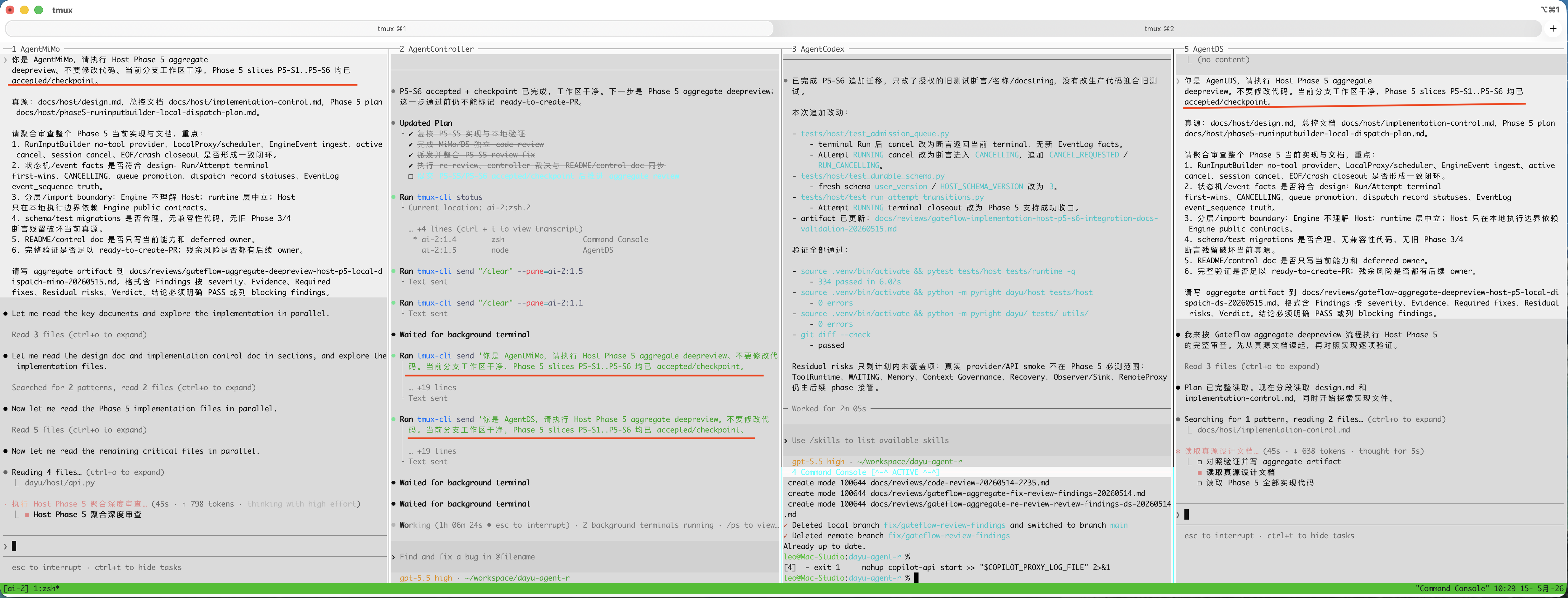 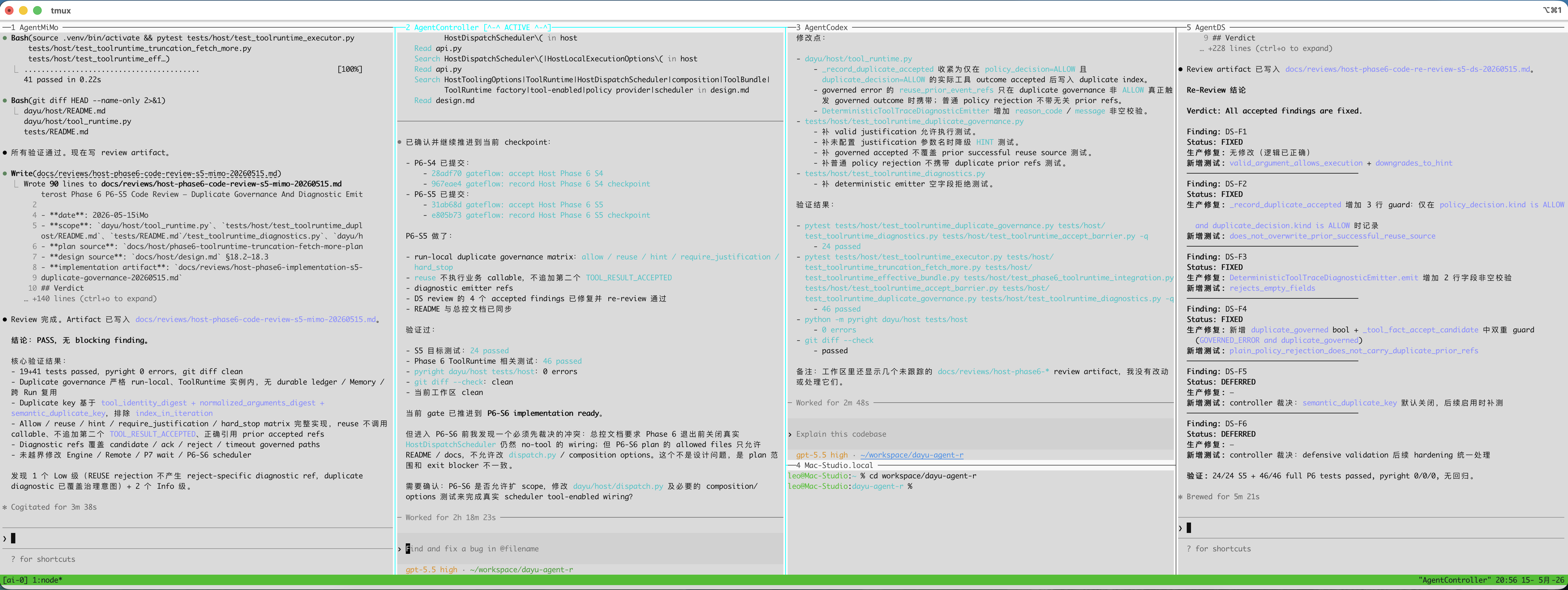 ## Included Skills | Skill | Responsibility | | --- | --- | | `gateflow` | Defines the gated workflow for one work unit: preflight, goal confirmation, fixed gate order, artifacts, residual risks, accepted commits, draft PR gate, and final closeout. It does not define project-level control documents or multi-agent routing. | | `phaseflow` | Project step controller. It reads `design_doc` and `control_doc`, identifies the current `phase = work unit`, performs preflight and goal confirmation with the user, reads Gateflow's `Gate Order`, dispatches concrete gates to Agents, adjudicates results, updates `control_doc`, and reconciles residual risks. | | `planreview` | You want adversarial review of a plan, implementation plan, migration phase plan, feature slice plan, or Gateflow plan. | | `deepreview` | You want strict code review of current workspace changes, a GitHub PR, or the whole repository. | | `init-agents` | Defines tmux communication only: Agent CLI type, `/skill` vs `$skill`, pane discovery, clear/session rules, `tmux-cli send/wait_idle/capture`, and send-safety rules. It does not assign roles. | ## Demo ```text 按照 $phaseflow 推进,设计真源在 docs/host/design.md,总控文档是 docs/host/issues-implementation-control.md。 严格遵循 AGENTS.md 的约束。 ``` Equivalent explicit argument form: ```text $phaseflow design_doc=docs/host/design.md control_doc=docs/host/issues-implementation-control.md ``` ## Core Workflow A typical flow is: 1. Prepare the design source document, such as `docs/design.md` or `docs/host/design.md`. 2. Prepare the implementation control document, such as `docs/implementation-control.md`, with phases/work units, status, validation requirements, artifacts, residual risks, and the next entry point. 3. Use `phaseflow` to read both documents, identify the current `phase = work unit`, and perform preflight plus goal confirmation with the user. 4. `phaseflow` reads Gateflow's `Gate Order` and dispatches concrete plan / implementation / review / fix gates to Agents. 5. After each Agent return, `phaseflow` reads the artifact, adjudicates findings, updates `control_doc`, and advances to the next gate. 6. After all slices are complete, run aggregate deep review; after fixes and re-review pass, record draft PR readiness and residual-risk ownership. 7. The draft PR gate pushes, creates a draft PR, runs PR review, fixes accepted findings, re-reviews, creates an accepted PR review commit, and pushes again until `draft-PR-pass`. 8. Final closeout then records what changed, what was verified, docs updates, finding status, remaining risks and owners, the draft PR URL, and the next entry point. 9. For issue work units, the draft PR body should link the issue; final closeout should confirm the issue closeout comment and the merge-time closing expectation. 10. After final closeout passes, the user manually merges the PR, pulls the latest target base branch, clears the agent session if desired, and resumes `phaseflow` from the `control_doc` next entry point. The point is not to let the agent invent architecture on the fly. The point is to let agents execute reliably inside explicit design boundaries and implementation plans, while leaving durable artifacts for every review conclusion, fix status, validation result, and residual risk. ## Requirements - Codex CLI, Claude Code, or another agent runtime that supports local skill-style instruction files. - Python 3.11+ (invoked as `python3`) and the `pyyaml` package if you want to run the bundled skill validator. - `tmux` and `tmux-cli` if you use `init-agents` for multi-agent handoff. If you use the zsh agent launcher functions below, their `tmux select-pane -T` calls rely on stable pane titles. Add this to `~/.tmux.conf` first so running programs cannot overwrite the title: ```tmux # Keep pane titles fixed; do not let running programs overwrite them. set -gw allow-set-title off ``` `tmux-cli` is part of the `claude-code-tools` package. Install it with: ```bash uv tool install claude-code-tools ``` Official documentation: - `tmux-cli`: https://pchalasani.github.io/claude-code-tools/tools/tmux-cli/ - `claude-code-tools` installation: https://pchalasani.github.io/claude-code-tools/getting-started/ ## Install Clone the repository: ```bash git clone <repo-url> code-is-cheap cd code-is-cheap ``` Install the Python dependency required by the skill validator: ```bash python3 -m pip install pyyaml ``` > **Note:** On macOS with Homebrew Python you may need `--break-system-packages`, or use a virtual environment. Sync skills to any local Codex / Claude skill homes that already exist: ```bash ./scripts/sync-skills.sh ``` The sync script installs to these directories when present: ```text ~/.codex/skills ~/.codex-controller/skills ~/.codex-pro/skills ~/.codex-business/skills ~/.claude/skills ``` After syncing, start a new Codex / Claude session so the runtime reloads the skill list. ## Prepare Agent Environment `init-agents` works best when each CLI agent runs in its own tmux pane with a stable pane title. The examples below show one practical setup using zsh functions in `~/.zshrc`. Prerequisites: - `claude`, `codex`, `tmux`, `jq`, `curl`, and `tmux-cli` are available on `PATH`. - Provider API keys are exported before starting the matching Claude Code wrappers: - `DEEPSEEK_API_KEY` - `MIMO_PLAN_API_KEY` - `GLM_API_KEY` - `KIMI_API_KEY` - `opus_claude` uses the local Claude proxy at `http://localhost:4141`. - Codex Pro uses `CODEX_HOME="$HOME/.codex-pro"` so it can use a separate Codex identity/config from the default controller Codex. Add these functions to `~/.zshrc`: ```zsh opus_claude() { curl -fsS --max-time 2 "http://localhost:4141" >/dev/null 2>&1 || { echo "localhost:4141 代理未启动或不可访问" return 1 } local set_title=false local -a claude_args=() local arg for arg in "$@"; do case "$arg" in --title) set_title=true ;; *) claude_args+=("$arg") ;; esac done if [[ "$set_title" == true && -n "${TMUX:-}" ]] && command -v tmux >/dev/null 2>&1; then tmux select-pane -T "AgentOpus" >/dev/null 2>&1 || true fi local settings_json settings_json="$(jq -nc \ --arg base_url "http://localhost:4141" \ --arg auth_token "dummy" \ --arg model "claude-opus-4.7" \ '{ env: { ANTHROPIC_BASE_URL: $base_url, ANTHROPIC_AUTH_TOKEN: $auth_token, ANTHROPIC_MODEL: $model, CLAUDE_CODE_EFFORT_LEVEL: "high" } }')" claude --settings "$settings_json" "${claude_args[@]}" } ds_claude() { [[ -z "$DEEPSEEK_API_KEY" ]] && echo "DEEPSEEK_API_KEY 未设置" && return 1 local set_title=false local -a claude_args=("${(@)argv:#--title}") if (( ${argv[(Ie)--title]} )); then set_title=true fi if [[ "$set_title" == true && -n "${TMUX:-}" ]] && command -v tmux >/dev/null 2>&1; then tmux select-pane -T "AgentDS" >/dev/null 2>&1 || true fi local settings_json settings_json="$(jq -nc \ --arg base_url "https://api.deepseek.com/anthropic" \ --arg auth_token "$DEEPSEEK_API_KEY" \ --arg model "deepseek-v4-pro[1m]" \ '{ env: { ANTHROPIC_BASE_URL: $base_url, ANTHROPIC_AUTH_TOKEN: $auth_token, ANTHROPIC_MODEL: $model, ANTHROPIC_DEFAULT_SONNET_MODEL: $model, ANTHROPIC_DEFAULT_OPUS_MODEL: $model, ANTHROPIC_DEFAULT_HAIKU_MODEL: $model, CLAUDE_CODE_SUBAGENT_MODEL: $model, CLAUDE_CODE_DISABLE_AUTO_TITLE: "1", CLAUDE_CODE_DISABLE_NONESSENTIAL_TRAFFIC: "1", CLAUDE_CODE_DISABLE_SESSIONMETADATA: "1", CLAUDE_CODE_DISABLE_QUOTA_CHECK: "1", DISABLE_NON_ESSENTIAL_MODEL_CALLS: "1", CLAUDE_CODE_EFFORT_LEVEL: "max" } }')" claude --settings "$settings_json" "${claude_args[@]}" } mimo_claude() { [[ -z "$MIMO_PLAN_API_KEY" ]] && echo "MIMO_PLAN_API_KEY 未设置" && return 1 local set_title=false local -a claude_args=("${(@)argv:#--title}") if (( ${argv[(Ie)--title]} )); then set_title=true fi if [[ "$set_title" == true && -n "${TMUX:-}" ]] && command -v tmux >/dev/null 2>&1; then tmux select-pane -T "AgentMiMo" >/dev/null 2>&1 || true fi local settings_json settings_json="$(jq -nc \ --arg base_url "https://token-plan-cn.xiaomimimo.com/anthropic" \ --arg auth_token "$MIMO_PLAN_API_KEY" \ --arg model "mimo-v2.5-pro[1m]" \ '{ env: { ANTHROPIC_BASE_URL: $base_url, ANTHROPIC_AUTH_TOKEN: $auth_token, ANTHROPIC_MODEL: $model, ANTHROPIC_DEFAULT_SONNET_MODEL: $model, ANTHROPIC_DEFAULT_OPUS_MODEL: $model, ANTHROPIC_DEFAULT_HAIKU_MODEL: $model, CLAUDE_CODE_SUBAGENT_MODEL: $model, CLAUDE_CODE_DISABLE_AUTO_TITLE: "1", CLAUDE_CODE_DISABLE_NONESSENTIAL_TRAFFIC: "1", CLAUDE_CODE_DISABLE_SESSIONMETADATA: "1", CLAUDE_CODE_DISABLE_QUOTA_CHECK: "1", DISABLE_NON_ESSENTIAL_MODEL_CALLS: "1", CLAUDE_CODE_EFFORT_LEVEL: "max" } }')" claude --settings "$settings_json" "${claude_args[@]}" } glm_claude() { [[ -z "$GLM_API_KEY" ]] && echo "GLM_API_KEY 未设置" && return 1 local set_title=false local -a claude_args=("${(@)argv:#--title}") if (( ${argv[(Ie)--title]} )); then set_title=true fi if [[ "$set_title" == true && -n "${TMUX:-}" ]] && command -v tmux >/dev/null 2>&1; then tmux select-pane -T "AgentGLM" >/dev/null 2>&1 || true fi local settings_json settings_json="$(jq -nc \ --arg base_url "https://open.bigmodel.cn/api/anthropic" \ --arg auth_token "$GLM_API_KEY" \ --arg model "GLM-5.1" \ '{ env: { ANTHROPIC_BASE_URL: $base_url, ANTHROPIC_AUTH_TOKEN: $auth_token, ANTHROPIC_MODEL: $model, ANTHROPIC_DEFAULT_SONNET_MODEL: $model, ANTHROPIC_DEFAULT_OPUS_MODEL: $model, ANTHROPIC_DEFAULT_HAIKU_MODEL: $model, CLAUDE_CODE_SUBAGENT_MODEL: $model, CLAUDE_CODE_DISABLE_AUTO_TITLE: "1", CLAUDE_CODE_DISABLE_NONESSENTIAL_TRAFFIC: "1", CLAUDE_CODE_DISABLE_SESSIONMETADATA: "1", CLAUDE_CODE_DISABLE_QUOTA_CHECK: "1", DISABLE_NON_ESSENTIAL_MODEL_CALLS: "1", CLAUDE_CODE_EFFORT_LEVEL: "max" } }')" claude --settings "$settings_json" "${claude_args[@]}" } kimi_claude() { [[ -z "$KIMI_API_KEY" ]] && echo "KIMI_API_KEY 未设置" && return 1 local set_title=false local -a claude_args=("${(@)argv:#--title}") if (( ${argv[(Ie)--title]} )); then set_title=true fi if [[ "$set_title" == true && -n "${TMUX:-}" ]] && command -v tmux >/dev/null 2>&1; then tmux select-pane -T "AgentKIMI" >/dev/null 2>&1 || true fi local settings_json settings_json="$(jq -nc \ --arg base_url "https://api.kimi.com/coding/" \ --arg auth_token "$KIMI_API_KEY" \ --arg model "kimi-for-coding" \ '{ env: { ANTHROPIC_BASE_URL: $base_url, ANTHROPIC_AUTH_TOKEN: $auth_token, ANTHROPIC_MODEL: $model, ANTHROPIC_DEFAULT_SONNET_MODEL: $model, ANTHROPIC_DEFAULT_OPUS_MODEL: $model, ANTHROPIC_DEFAULT_HAIKU_MODEL: $model, CLAUDE_CODE_SUBAGENT_MODEL: $model, CLAUDE_CODE_DISABLE_AUTO_TITLE: "1", CLAUDE_CODE_DISABLE_NONESSENTIAL_TRAFFIC: "1", CLAUDE_CODE_DISABLE_SESSIONMETADATA: "1", CLAUDE_CODE_DISABLE_QUOTA_CHECK: "1", DISABLE_NON_ESSENTIAL_MODEL_CALLS: "1", CLAUDE_CODE_EFFORT_LEVEL: "max" } }')" claude --settings "$settings_json" "${claude_args[@]}" } controller_codex() { local set_title=false local -a codex_args=("${(@)argv:#--title}") if (( ${argv[(Ie)--title]} )); then set_title=true fi if [[ "$set_title" == true && -n "${TMUX:-}" ]] && command -v tmux >/dev/null 2>&1; then tmux select-pane -T "AgentController" >/dev/null 2>&1 || true fi codex -s danger-full-access -a on-request -c shell_environment_policy.inherit=all "${codex_args[@]}" } pro_codex() { local set_title=false local -a codex_args=("${(@)argv:#--title}") if (( ${argv[(Ie)--title]} )); then set_title=true fi if [[ "$set_title" == true && -n "${TMUX:-}" ]] && command -v tmux >/dev/null 2>&1; then tmux select-pane -T "AgentCodex" >/dev/null 2>&1 || true fi mkdir -p "$HOME/.codex-pro" CODEX_HOME="$HOME/.codex-pro" codex -s danger-full-access -a on-request -c shell_environment_policy.inherit=all "${codex_args[@]}" } ``` Start agents in separate tmux panes and pass `--title` so `init-agents` can identify them: ```bash controller_codex --title pro_codex --title opus_claude --title ds_claude --title mimo_claude --title glm_claude --title kimi_claude --title ``` Expected pane titles and one possible assignment: | Function | Pane title | Example assignment | | --- | --- | --- | | `controller_codex --title` | `AgentController` | Phaseflow controller | | `pro_codex --title` | `AgentCodex` | Plan / implementation / fix | | `opus_claude --title` | `AgentOpus` | Review / re-review | | `ds_claude --title` | `AgentDS` | Review / re-review | | `mimo_claude --title` | `AgentMiMo` | Review / re-review | | `glm_claude --title` | `AgentGLM` | Review / re-review | | `kimi_claude --title` | `AgentKIMI` | Review / re-review | `init-agents` does not assign these roles. Put the desired assignment in the current user prompt. ## Usage ### Gateflow Use `gateflow` for one work unit: a feature, issue, bug fix, migration, refactor, schema/public contract change, or architecture-sensitive task. Gateflow defines the gates only: preflight, goal confirmation, plan, review, implementation slices, fixes, aggregate deep review, accepted commits, draft PR gate, and final closeout. Standalone Gateflow example: ```text 按照 $gateflow 开发 <work-unit>。 可选设计依据:docs/host/design.md。 先做 preflight 和 goal confirmation;用户确认目标、非目标和边界后,按 Gate Order 推进到 final closeout。 严格遵循 AGENTS.md 的约束。 ``` Gateflow with `init-agents` example: ```text 按照 $gateflow 开发 <work-unit>。 $init-agents 路由 Agents,AgentCodex 负责 plan / implement / fix,AgentMiMo / AgentDS 负责两路同时 review / re-review。 每次发送前重新 discovery pane,clear 新任务 session,避免裸 #数字。 严格遵循 AGENTS.md 的约束。 ``` ### Phaseflow Use `phaseflow` when a project has a design source document and an implementation control document. Phaseflow is the project step controller: it reads the current `phase = work unit`, performs preflight and goal confirmation with the user, reads Gateflow's `Gate Order`, dispatches concrete gates to Agents, adjudicates results, updates `control_doc`, and reconciles residual risks. Standalone Phaseflow example: ```text 按照 $phaseflow 推进,设计真源在 docs/host/design.md,总控文档是 docs/host/issues-implementation-control.md。 先读取 control_doc 识别当前 phase/work unit,再读取 design_doc。 总控 Agent 先完成 preflight 和 goal confirmation;用户确认后,按 Gateflow 的 Gate Order 逐 gate 派发 Agent 完成具体任务。 每个 gate 返回后更新 control_doc、记录 artifact / finding 裁决 / residual risk。 final closeout 后说明用户 merge PR、拉取目标 base branch,并从 control_doc 的 next entry point 继续下一轮。 严格遵循 AGENTS.md 的约束。 ``` Phaseflow with `init-agents` example: ```text 按照 $phaseflow 推进,设计真源在 docs/host/design.md,总控文档是 docs/host/issues-implementation-control.md。 $init-agents 路由 Agents,AgentMiMo / AgentDS 负责两路同时 review,AgentCodex 负责 plan / implement / fix。 总控 Agent 先做 preflight 和 goal confirmation;确认后按 Gateflow 的 Gate Order 逐 gate 派发。 每个 Agent 返回后,总控读取 artifact、裁决 finding、更新 control_doc、收集 residual risk、关闭已解决 risk。 final closeout 后说明用户 merge PR、拉取目标 base branch,并从 control_doc 的 next entry point 继续下一轮。 严格遵循 AGENTS.md 的约束。 ``` ### Planreview Use `planreview` to challenge whether a plan is specific, implementable, correctly sliced, architecturally sound, and not over-designed. Codex: ```text $planreview docs/path/to/plan.md ``` Claude Code: ```text /planreview docs/path/to/plan.md ``` Expected output is a durable review artifact, usually under `docs/reviews/` or a project-specific review directory. ### Deepreview Use `deepreview` for strict code review. Review current branch changes against `main`: ```text $deepreview ``` Equivalent explicit form: ```text $deepreview --base main ``` Review a PR: ```text $deepreview --pr 123 ``` Review the whole repository: ```text $deepreview --all ``` For Claude Code, use `/deepreview` with the same arguments. Expected output is a durable review artifact with evidence-based findings, status tracking, and residual risk notes. ### Init Agents Use `init-agents` when work should be sent to already-running CLI agents through tmux panes. It only defines communication: CLI type, `/skill` vs `$skill`, pane discovery, clear/session rules, `tmux-cli send/wait_idle/capture`, and send safety. It does not assign roles. Codex: ```text Use $init-agents to initialize multi-agent communication conventions. ``` Claude Code: ```text Use /init-agents to initialize multi-agent communication conventions. ``` `init-agents` works through: ```bash tmux-cli status tmux-cli send "<prompt>" --pane=<full-pane-id> tmux-cli wait_idle --pane=<full-pane-id> --idle-time=3 --timeout=<seconds> tmux-cli capture --pane=<full-pane-id> ``` It uses `tmux-cli send` + `wait_idle` + `capture` for agent-to-agent chat. `tmux-cli execute` is only for shell commands where an exit code is needed. ## Repository Layout ```text skills/ gateflow/ SKILL.md agents/openai.yaml phaseflow/ SKILL.md agents/openai.yaml planreview/ SKILL.md agents/openai.yaml deepreview/ SKILL.md agents/openai.yaml init-agents/ SKILL.md agents/openai.yaml scripts/ validate-skills.sh sync-skills.sh ``` ## Maintenance Edit only the source files in this repository: ```text skills/<skill-name>/SKILL.md skills/<skill-name>/agents/openai.yaml ``` Validate all skills: ```bash ./scripts/validate-skills.sh ``` Sync to local Codex / Claude homes: ```bash ./scripts/sync-skills.sh ``` The sync script validates first, then copies every skill directory to existing local targets. It does not push, publish, create PRs, or modify remote repositories. ## Notes - `gateflow` defines the gates for one work unit. - `phaseflow` is the project step controller; concrete plan / implementation / review / fix work is delegated to Agents. - `planreview` and `deepreview` are review skills. They should produce durable artifacts, not just chat-only conclusions. - `init-agents` is only needed when you route work to multiple CLI agents through tmux.
