KO
|
EN
gitlite — search
Search
#typescript
#ai-agents
#ai
#dsh-plugin
#deepseek-harness
#open-source
#cli
#claude-code
#codex
#developer-tools
#react
#windows
LL-Java-Zip
★ 51
Open GitHub ↗
Lower level ZIP support for Java
Download README (.md)
Explore Similar Repositories
ZIPFileRaider
:
ZIP File Raider - Burp Extension for ZIP File Payload Testing
zstream
:
An elixir library to write and read ZIP file in a streaming fashion
zzCrack
:
Advanced Zipfile Cracker With Support For Bruteforce Attacks, Dictionary Attacks and to save the current state
zipdump
:
Analyze zipfile, either local, or from url
zip-forge
:
A tiny, formatter-friendly Java DSL for creating ZIP files.
// repository documentation
Was this content helpful?
★ 0
(0 ratings)
Select Rating:
★
★
★
★
★
Submit Feedback
Recent Feedback
×
Download README
Do you want to download the
README.md
file for
LL-Java-Zip
?
Download (.md)
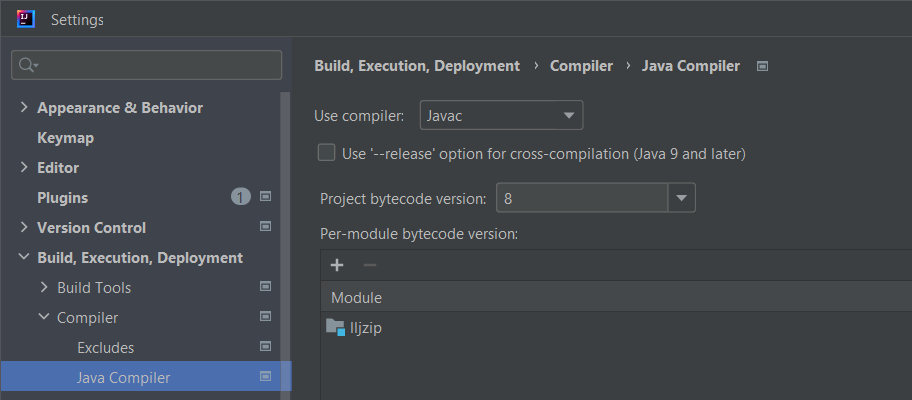
# LLJ-ZIP [](https://jitpack.io/#Col-E/LL-Java-Zip)  A closer to the spec implementation of ZIP parsing for Java. ## Relevant ZIP information **[Official spec](https://pkware.cachefly.net/webdocs/casestudies/APPNOTE.TXT)** The notes and structure outlines are the basis for most of LLJ-ZIP. **[JVM zip parsing](https://github.com/openjdk/jdk/tree/6701eba736ac51db4b0d0d7db6c7bdd4ae8a1c16/src/java.base/share/native/libzip) & [JLI](https://github.com/openjdk/jdk/blob/739769c8fc4b496f08a92225a12d07414537b6c0/src/java.base/share/native/libjli/parse_manifest.c#L120)** The JVM zip reader implementation is based off this piece. > This is a zip format reader for seekable files, **that tolerates leading and trailing garbage**, > and **tolerates having had internal offsets adjusted for leading garbage** _(as with Info-Zip's zip -A)_. But that's not all it does. That's just what that one comment says. Some other fun quirks of the JVM zip parser: - The end central directory entry is found by scanning from the end of the file, rather than from the beginning. - The central directory values are authoritative. Names/values defined by the local file headers are ignored. - The file data of local file headers is not size bound by the file header's compressed size field. Instead, it uses the central directory header's declared size. - Class names are allowed to end in trailing `/` which most tools interpret as directories. ## Additional features - Reads ZIP files using `MemorySegment` backed mapped files. - Highly configurable, offering 3 ZIP reading strategies out of the box _(See `ZipIO` for convenience calls)_ - Std / Forward scanning: Scans for `EndOfCentralDirectory` from the front of the file, like many other tools - Naive: Scans only for `LocalFileHeader` values from the front of the file, the fastest implementation, but obviously naive - JVM: Matches the behavior of the JVM's ZIP parser, including a number of odd edge cases. Useful for opening JAR files to mirror `java -jar <path>` behavior. - Inputs do not have to be on-disk to be read, you can supply zip data in-memory. - Tracks data in front of ZIP contents as `ZipArchive.getPrefixData()` - Useful for cases like keeping track of the executable header of Jar2Exe archives. ## Usage Maven dependency: ```xml <dependency> <groupId>software.coley</groupId> <artifactId>lljzip</artifactId> <version>${zipVersion}</version> <!-- See release page for latest version --> </dependency> ``` Gradle dependency: ```groovy implementation group: 'software.coley', name: 'lljzip', version: zipVersion implementation "software.coley:lljzip:${zipVersion}" ``` Basic usage: ```java // ZipIO offers a number of different utility calls for using different ZipReader implementations ZipArchive archive = ZipIO.readJvm(path); // Local files have the actual file data/bytes. // These entries mirror data also declared in central directory entries. List<LocalFileHeader> localFiles = archive.getLocalFiles(); for (LocalFileHeader localFile : localFiles) { // Data model mirrors how a byte-buffer works. ByteData data = localFile.getFileData(); // You can extract the data to raw byte[] byte[] decompressed = ZipCompressions.decompress(localFile); // Or do so with a specific decompressor implementation byte[] decompressed = localFile.decompress(DeflateDecompressor.INSTANCE); } // Typically used for authoritative definitions of properties. // Some ZIP logic will ignore properties of 'LocalFileHeader' values and use these instead. // - Try using a hex editor to play around with this idea. Plenty of samples in the test cases to look at. List<CentralDirectoryFileHeader> centralDirectories = archive.getCentralDirectories(); // Information about the archive and its contents. EndOfCentralDirectory end = archive.getEnd(); ``` For more detailed example usage see the [tests](src/test/java/software/coley/lljzip). > How does each `ZipReader` implementation map to standard Java ZIP handling? If you're looking to see which implementation models different ways of reading ZIP files in Java, here's a table for reference: | Java closest equivalent | LL-Java-Zip | |-------------------------|----------------------------------------------------| | `ZipFile` | `JvmZipReader` / `ZipIO.readJvm(...)` | | `ZipInputStream` | `ForwardScanZipReader` / `ZipIO.readStandard(...)` | | N/A | `NaiveLocalFileZipReader` / `ZipIO.readNaive(...)` | There is also a `ZipFile` delegating reader `AdaptingZipReader` but it should primarily be used only for debugging purposes. ## Building Due to some `sun.misc.Unsafe` hacks _(For faster deflate performance)_, you will get compiler warnings when first opening the project in IntelliJ. You can resolve this by changing the compiler target: