KO
|
EN
gitlite — search
Search
#javascript
#python
#hacktoberfest
#react
#ai
#typescript
#llm
#go
#golang
#android
#machine-learning
#rust
#deep-learning
#linux
redux-miniprogram-bindings
★ 11
Open GitHub ↗
适用于小程序的 Redux 绑定辅助库
Download README (.md)
Explore Similar Repositories
pytorch-inpainting-partial-conv
:
A PyTorch implementation of the "Image Inpainting for Irregular Holes Using Partial Convolutions" paper from Liu et al at NVIDIA
phpLaravelCryptoTradingBot
:
Simple bot that makes trades on the Binance API
Face-Recognition-with-FaceNet-and-OpenCV
:
Real Time Face Recognition
NLP-ML_CS-Cpp_Review
:
NLP/ML面试各类资料链接 汇总(主要Github收集)
tiff
:
An extended version of x/image/tiff.
// repository documentation
Was this content helpful?
★ 0
(0 ratings)
Select Rating:
★
★
★
★
★
Submit Feedback
Recent Feedback
×
Download README
Do you want to download the
README.md
file for
redux-miniprogram-bindings
?
Download (.md)
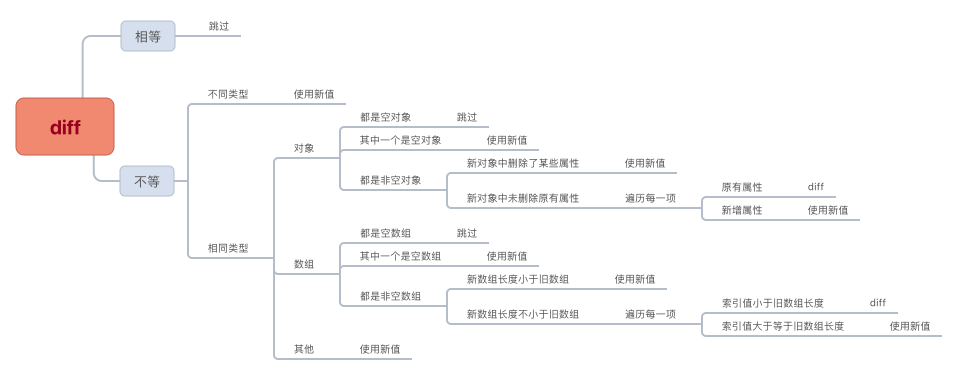
# redux-miniprogram-bindings   适用于小程序的 [Redux](https://github.com/reduxjs/redux) 绑定辅助库 ## 特性 - API 简单灵活,只需一个 `connect` 即可轻松使用(提供 `$page` 和 `$component` 别名快捷方法) - 功能完善,提供了多种使用方式,可满足不同的需求和使用场景 - 支持在 XML 中使用 - 执行 dispatch 后所有未销毁的页面(或组件)内部状态自动更新,视图自动队列批量更新渲染 - 自动进行 diff 优化和批量队列更新处理,性能优异 - 支持 `微信小程序` 和 `支付宝小程序` ## 安装 - 通过 `npm` 或 `yarn` 安装 ```bash # npm $ npm install --save redux-miniprogram-bindings redux # yarn $ yarn add redux-miniprogram-bindings redux ``` - 也可以直接引入 `dist` 目录下对应的 `redux-miniprogram-bindings` 文件 - 需要单独引入 [redux](https://github.com/reduxjs/redux) 文件(这只是个绑定库,并不包含 redux 的代码在内) ## 使用 1. 创建 Redux 的 Store 实例 ```js // store.js import { createStore, combineReducers } from 'redux' function counter(state = 0, action) { switch (action.type) { case 'INCREMENT': return state + (action.step || 1) case 'DECREMENT': return state - (action.step || 1) default: return state } } const initUserInfo = { name: 'userName', age: 25 } function userInfo(state = initUserInfo, action) { switch (action.type) { case 'SET_USER_INFO': return { ...state, ...action.userInfo } default: return state } } const rootReducer = combineReducers({ counter, userInfo }) const store = createStore(rootReducer) export default store ``` 2. 在 `app.js` 文件中设置 provider ```js // setupStore.js import store from 'your/store/path' // 微信小程序 import { setProvider } from 'redux-miniprogram-bindings' // 支付宝小程序 // import { setProvider } from 'redux-miniprogram-bindings/dist/redux-miniprogram-bindings.alipay.min.js' setProvider({ store }) ``` ```js // app.js // 确保在其他代码之前调用 import './setupStore.js' App({ /** ... */ }) ``` 3. 在页面中使用 ```js import { $page } from 'redux-miniprogram-bindings' import { actionCreator1, actionCreator2 } from 'your/store/action-creators/path' $page({ mapState: ['dependent', 'state'], mapDispatch: { methodsName1: actionCreator1, methodsName2: actionCreator2, }, })({ onLoad() { // 读取 state 中的值 const { dependent } = this.data // dispatch actionCreator1 this.methodsName1() // dispatch actionCreator2 this.methodsName2(/** ...args */) }, }) ``` 4. 在组件中使用 ```js import { $component } from 'redux-miniprogram-bindings' import { actionCreator1, actionCreator2 } from 'your/store/action-creators/path' $component({ mapState: [ (state) => ({ data1: state.dependent, data2: state.state, }), ], mapDispatch: (dispatch) => ({ methodsName1: () => dispatch(actionCreator1()), methodsName2: (...args) => dispatch(actionCreator2(...args)), }), })({ attached() { // 读取 state 中的值 const { data1: dependent } = this.data // dispatch actionCreator1 this.methodsName1() // dispatch actionCreator2 this.methodsName2(/** ...args */) }, }) ``` 5. 在 XML 中使用 ```html <view wx:if="{{ data1 }}">{{ data2 }}</view> ``` 6. 详细用法请参考 [`API`](#API) 介绍和 [`示例`](https://github.com/DPFlying/redux-miniprogram-bindings/tree/master/example) ## API ### setProvider:`(config) => void` 设置 Provider - config 对象的属性: - store:`Store` Redux 的 Store 实例对象,必传 - namespace:`string` 命名空间,默认为空 当设置命名空间后,会将所有依赖的 state 数据存放到 `以命名空间字段值为 key` 的对象中,此时读取 state 值需要加上命名空间字段值 > 例如设置 `namespace: '$store'`,那么在页面(或组件)中获取依赖的 state 值需要使用 `this.data.$store.xxx` 形式,在 XML 中也需要加上前缀:`<view>{{ $store.xxx }}</view>` > 命名空间存在的意义: > > - 明确哪些数据是来自于 store > - store 中的数据必须通过 dispatch 才能触发更新。命名空间可以避免无意中使用 `this.setData` 造成 store 中的数据被修改,因为需要加上额外的命名空间前缀:`this.setData({ '$store.xxx': xxx })` - component2: `boolean` 是否开启了 component2,默认为 `false`,仅 `支付宝小程序` 支持 - 该函数必须在所有用到 `store` 的代码之前调用 **最佳实践:** 要保证 `setProvider` 在所有用到 `store` 的代码之前调用,但是代码中各处充斥着对 `store` 的使用,如何保证? 可以单独新建一个 js 文件(例如 `setupStore.js`)用来调用 `setProvider`,然后在 `app.js` 文件最顶部引入该文件即可 ```js // setupStore.js import store from 'your/store/path' // 微信小程序 import { setProvider } from 'redux-miniprogram-bindings' setProvider({ store }) ``` ```js // app.js import './setupStore.js' App({}) ``` ### connect:`(config) => (options) => void | options` 连接 store - config 对象的属性: - type:`"page" | "component"` 所连接实例的类型,默认为 `page`,可选值:`page`、`component` - mapState:`(string | ((state: Object) => Object))[]` 实例依赖的 state,可选 会将依赖的 state 数据注入到 data 中,并在后续状态改变时自动更新。是个数组类型,数组中可以包含字符串、函数 - 数组中的字符串:字符串为依赖的 state 的相应的 key 值,页面(或组件)会在依赖的 state 发生改变时自动更新状态和队列批量触发视图渲染 ```js { // state1、state2 为 store 的 state 中的 key 值 // store.getState().state1 // store.getState().state2 mapState: ['state1', 'state2'] } ``` - 数组中的函数:函数接收 state 作为参数,可通过 state 获取到最新的状态数据,该函数必须返回一个对象,对象中的每一项可以是任意值,一般是根据 state 组合的数据 该方式会在 store 数据发生改变(并非一定是当前实例依赖的状态发生改变)时执行函数,然后对函数返回的结果和现有 data 中的数据进行 diff 比较,确认发生改变后队列批量更新渲染 ```js { mapState: [ (state) => ({ region: state.province + state.city + state.area, name: state.userInfo.name, }), ] } ``` - 字符串和函数混合:函数会在每次 store 数据发生改变时调用,请确保函数足够的小和快。出于性能优化,建议多使用字符串形式,减少使用函数形式,必要时将两种形式混合使用 ```js { mapState: [ 'name', (state) => ({ region: state.province + state.city + state.area, }), ] } ``` - mapDispatch:`Object | dispatch => Object` 注入可执行的 dispatch 处理函数,可选 - 对象形式:`key` 值为自定义函数名,实例内部可以通过该名称访问该方法,`value` 值为 `actionCreator` 函数。会将 actionCreator 函数包装成自动调用 disptach 的函数,并注入到实例方法中 ```js // 配置 mapDispatch: { methodsName1: actionCreator1, methodsName2: actionCreator2, } // 调用 this.methodsName1() // 相当于 dispatch(actionCreator1()) // 调用 this.methodsName2(a, b, c) // 相当于 dispatch(methodsName2(a, b, c)) ``` - 函数形式:函数接收 dispatch 作为参数,返回一个对象,包含自定义整理后的处理函数 ```js // 配置 mapDispatch: (dispatch) => ({ methodsName1: () => dispatch(actionCreator1()), methodsName2: (...args) => dispatch(actionCreator2(...args)), }) // 调用 this.methodsName1() this.methodsName2(a, b, c) ``` > **注意:** 通过 mapDispatch 注入的函数也可以在 XML 中作为事件处理函数使用。如果函数需要传递参数时请注意,事件处理函数默认会传入 `event` 对象作为函数的第一个参数 ```html <view bind:tap="handleAdd">Add</view> ``` - manual:`boolean` 是否需要手动调用 `Page()` 或 `Component()`,默认值为 `false` 当设置为 `true` 时,`connect` 会返回处理好的传入的 options 对象,需要手动调用 `Page()` 或 `Component()` 进行实例注册。这为使用者自定义扩展提供了途径 ```js const options = connect({ manual: true, })({ // ... }) options.xxx = 'xxx' Page(options) ``` - 扩展封装:可能你不喜欢 `connect` 的传参方式,或者不想使用前还要引用,那么可以自行扩展封装 示例扩展 Page: ```js // bootstrap.js import { connect } from 'redux-miniprogram-bindings' const oldPage = Page Page = function (options) { const { mapState, mapDispatch, ...restOptions } = options const realOptions = connect({ mapState, mapDispatch, // 此处必须设置为手动挂载,因为已经重写了 Page 函数 manual: true, })(restOptions) oldPage(realOptions) } ``` ```js // app.js // 引入扩展 import './bootstrap.js' App({}) ``` ```js // 使用 Page({ mapState: [ // ... ], mapDispatch: { // ... }, }) ``` ### \$page connect Page 的别名 ```js $page()({}) // 相当于 connect({ type: 'page' })({}) ``` ### \$component connect Component 的别名 ```js $component()({}) // 相当于 connect({ type: 'component' })({}) ``` ### Utils #### useStore: `() => Store` 获取 store 实例对象 ```js import { useStore } from 'redux-miniprogram-bindings' const store = useStore() // 相当于如下方式,但是支付宝小程序分包时不建议使用如下方式,会出现多 store 实例 import store from 'your/store/path' ``` #### useState: `() => Object` 获取当前 state 对象 ```js import { useState } from 'redux-miniprogram-bindings' const state = useState() // 相当于如下方式,但是支付宝小程序分包时不建议使用如下方式,会出现多 store 实例 import store from 'your/store/path' const state = store.getState() ``` #### useDispatch: `() => Dispatch` 获取 dispatch 函数 ```js import { useDispatch } from 'redux-miniprogram-bindings' const dispatch = useDispatch() // 相当于如下方式,但是支付宝小程序分包时不建议使用如下方式,会出现多 store 实例 import store from 'your/store/path' const dispatch = store.dispatch ``` #### useSubscribe 添加 store 订阅 接收一个回调函数,该函数会在 store 数据发生改变时调用,该函数接收两个参数,分别是当前状态 currState 和之前状态 prevState,通过对比两者数据实现细化监听 返回一个函数,调用该函数可以取消订阅 ```js import { useSubscribe } from 'redux-miniprogram-bindings' $page()({ onLoad() { // 启用订阅 this.unsubscribe = useSubscribe((currState, prevState) => { if (currState.userInfo.name !== prevState.userInfo.name) { console.log('userName change') } }) }, onUnload() { // 解除订阅 this.unsubscribe() }, }) ``` #### useRef 获取 state 对象中数据的引用 接收一个 selector 函数,该函数接收 state 作为参数,可以返回任意值(建议返回使用 state 组装的数据) 返回一个 Ref 对象,该对象拥有一个只读的 value 属性,通过该属性可以得到 selector 函数返回的最新值 ```js import { useRef } from 'redux-miniprogram-bindings' const selector = (state) => state.userInfo.name const userNameRef = useRef(selector) setInterval(() => { // 不管 state 数据是否发生改变,得到的永远是 state.userInfo.name 的最新值 console.log(userNameRef.value) }, 1000) ``` 也可以通过如下方式实现相同功能 ```js import { useState } from 'redux-miniprogram-bindings' const selector = (state) => state.userInfo.name const getUserName = () => selector(useState()) setInterval(() => { // 不管 state 数据是否发生改变,得到的永远是 state.userInfo.name 的最新值 console.log(getUserName()) }, 1000) ``` 具体使用哪种方式完全看个人喜好,这里只是提供了一个工具方法 #### useSelector 对 selector 函数结果进行缓存 接收一个 selector 函数,该函数接收 state 作为参数,可以返回任意值(建议返回使用 state 组装的数据) 同时接受一个 deps 数组,该数组包含 selector 函数结果变更依赖的 state 的 key 值 返回一个同 selector 函数签名一致的函数,该函数每次执行时会对依赖项 deps 数组中每一项的值进行浅比较,只有依赖项的值发生改变时才会重新执行函数,降低复杂逻辑函数的执行频率 ```js // 配合 useRef 使用 import { useRef, useSelector } from 'redux-miniprogram-bindings' // 只在 state.userInfo 发生改变时才会重新执行 const userNameselector = useSelector((state) => state.userInfo.name, ['userInfo']) const userNameRef = useRef(userNameselector) setInterval(() => { console.log(userNameRef.value) }, 1000) ``` ```js // 配合 mapState 使用 import { $page, useSelector } from 'redux-miniprogram-bindings' // 只在 state.userInfo 发生改变时才会重新执行 const userNameSelector = useSelector((state) => ({ userName: state.userInfo.name }), ['userInfo']) $page({ mapState: [userNameSelector], })({}) ``` ## diff 逻辑